
Pares&Alvarez has managed to position itself in the market as one of the largest 100% Chilean Engineering Services companies, with the ability to deliver comprehensive and tailor-made solutions for our clients, supported by expert human capital and strict compliance with internal standards, backed by the certifications of our Quality Management System.
Our engineering, procurement, and construction management teams work in an integrated way, allowing us to deliver tailored solutions under EPCM, EPC, or EP models.
Leveraging our in-depth knowledge of the local market, we help our clients optimize total project costs and accelerate execution timelines, ensuring greater efficiency and value creation.
PROYECTS
Manufacturing
GLASS BOTTLE FACTORY EXPANSION, RENGO PLANT
GLASS BOTTLE FACTORY EXPANSION, RENGO PLANT
Industrial Sector
Manufacturing
Client
Verallia
Location
Rengo, VI Region
Date
2018-2020
Service Area
EPCM contract
Solutions
Basic engineering, Capex estimation, project scheduling, detailed engineering in mechanical, piping, civil, structural and electrical; architecture, BIM modelling, procurement management and project administration services.
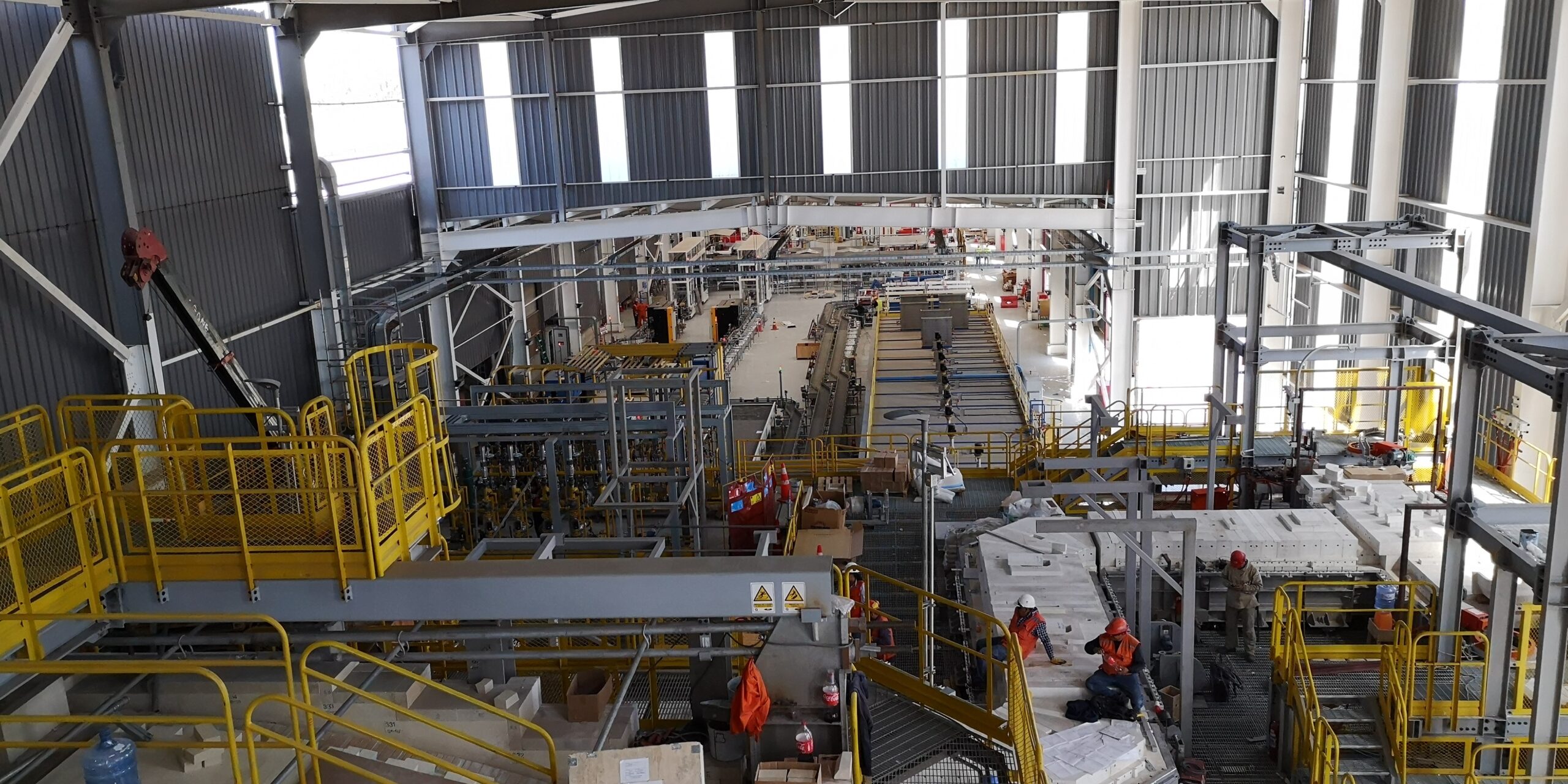
Verallia, considered a world leader in the glass packaging sectors for wines, spirits and food, produces more than 16,000 million containers each year for its more than 10,000 customers around the world. In Chile, the company produces glass bottles to serve mainly the wine industry, using the latest technology available in the manufacture of glass containers in its modern plant located in Rengo.
In order to maintain this leadership, Verallia decided to modernize its factory, which was enabled to produce 240 tons of molten glass per day through the operation of a melting furnace and 2 production lines with 120 tons/day of processing capacity each.
The constructed area of the factory was 4.7 ha, due to the fact that in recent years a Liquefied Natural Gas (LNG) tank was implemented that occupies an area of 525 m2, a treatment plant of “cullet” or calcín (glass from recycling) that occupies an area of approximately 591 m2.
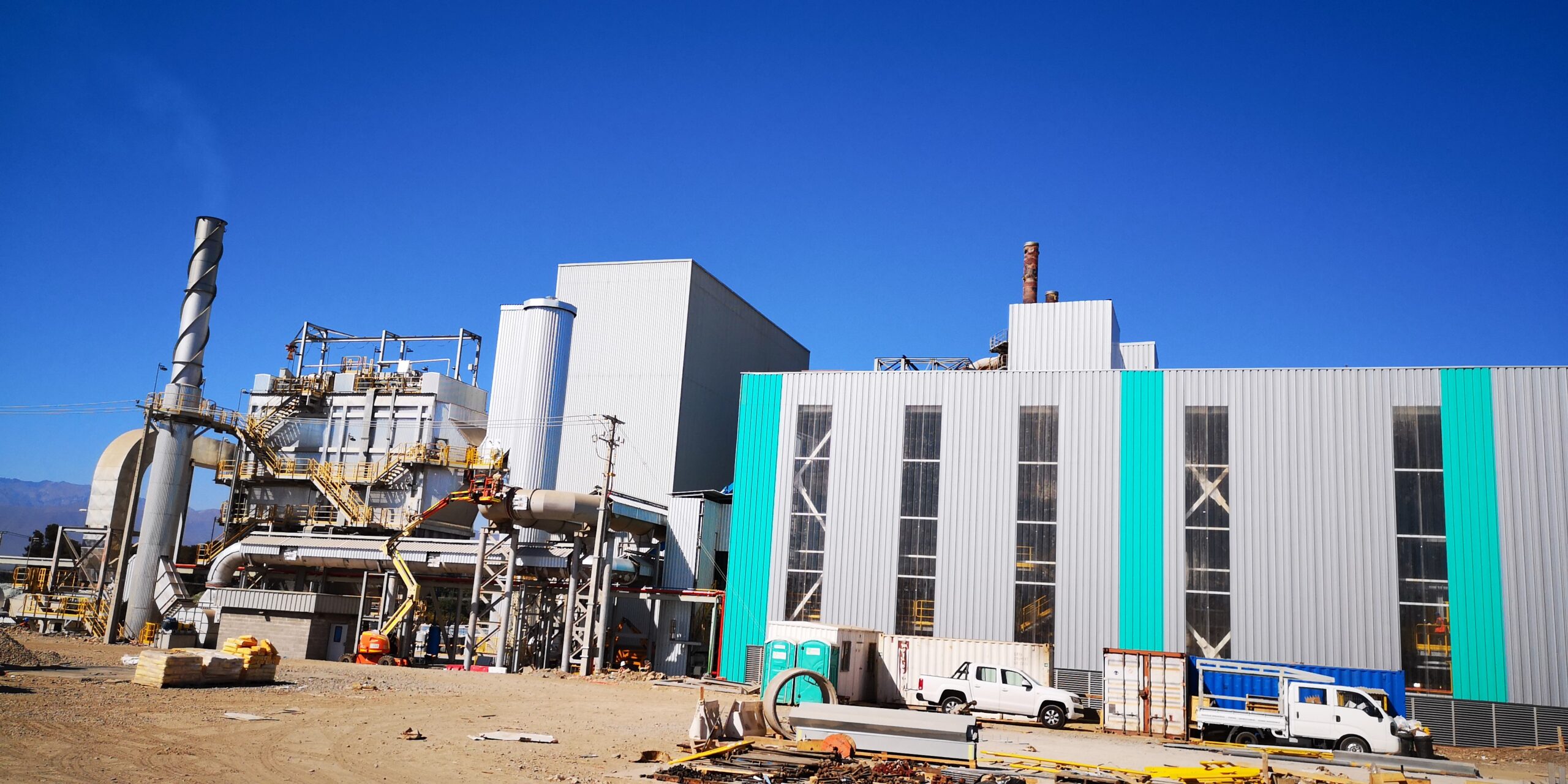
The project carried out by Pa Engineering contemplated increasing the production capacity of the factory to total 405 tons/day of molten glass, for which the replacement of the current furnace was considered, because it fulfilled its useful life, with a new one that allowed the integration of the largest amount of molten glass, and the incorporation of a new production line of 165 tons/day.
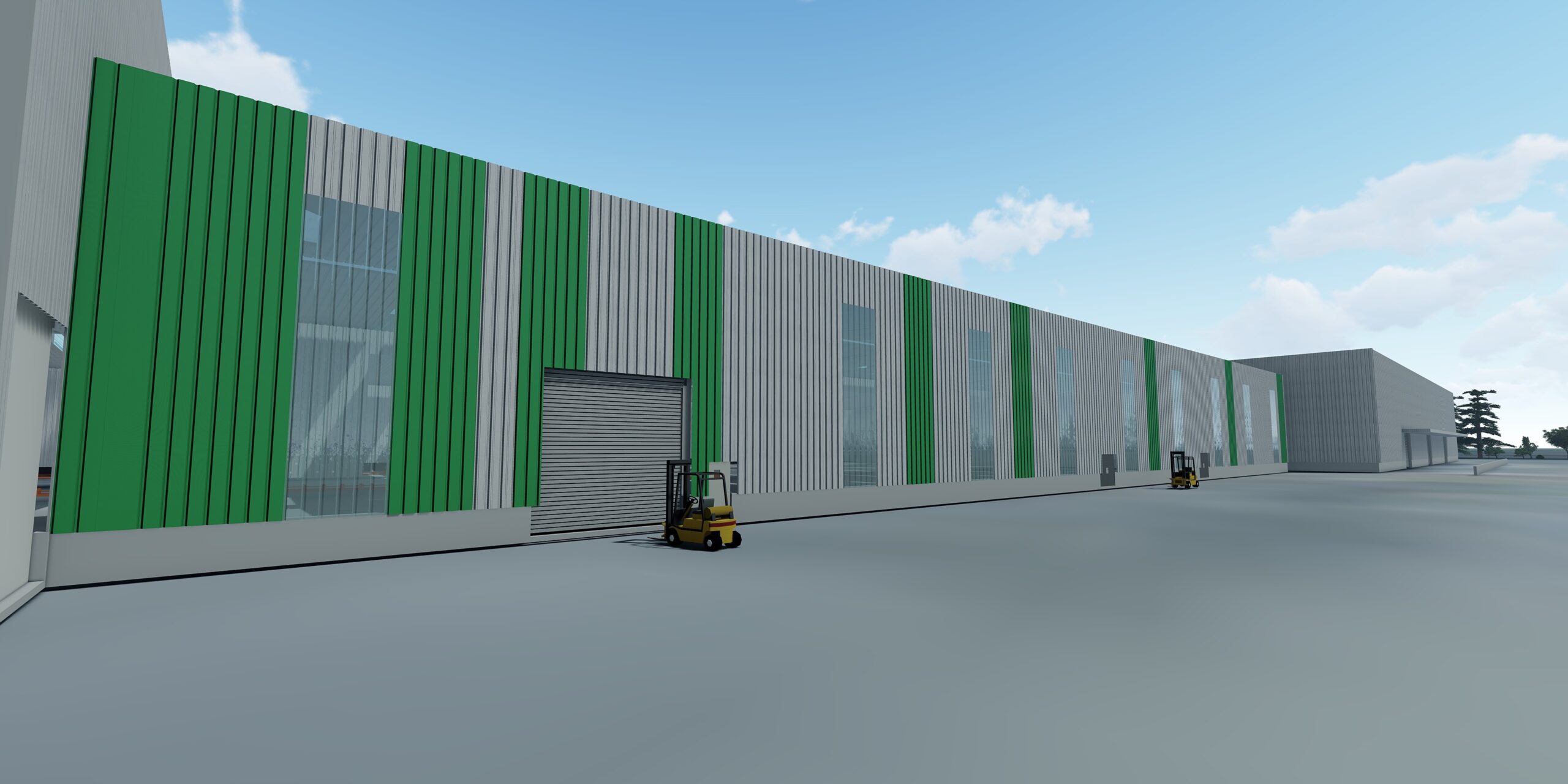
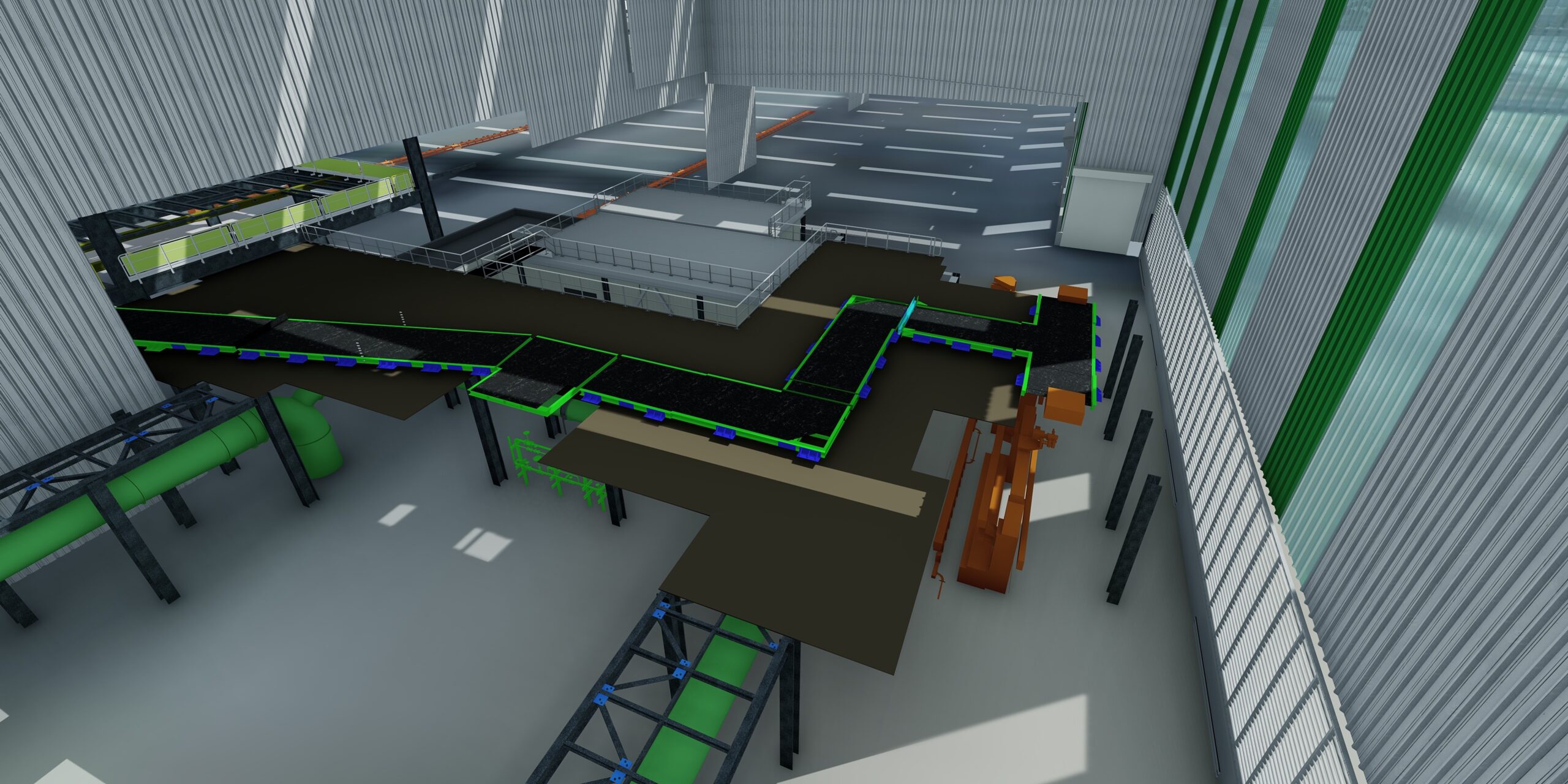
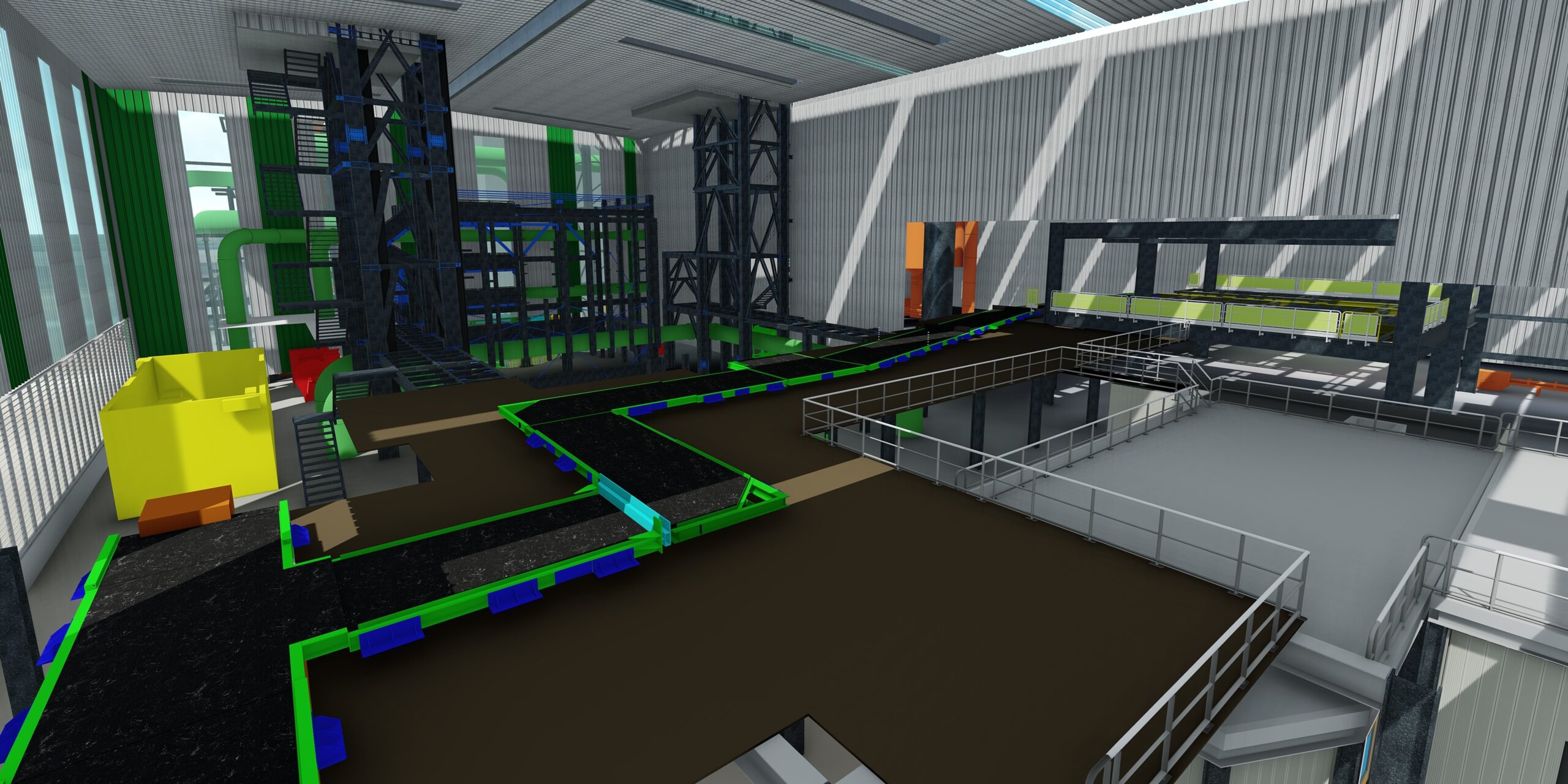
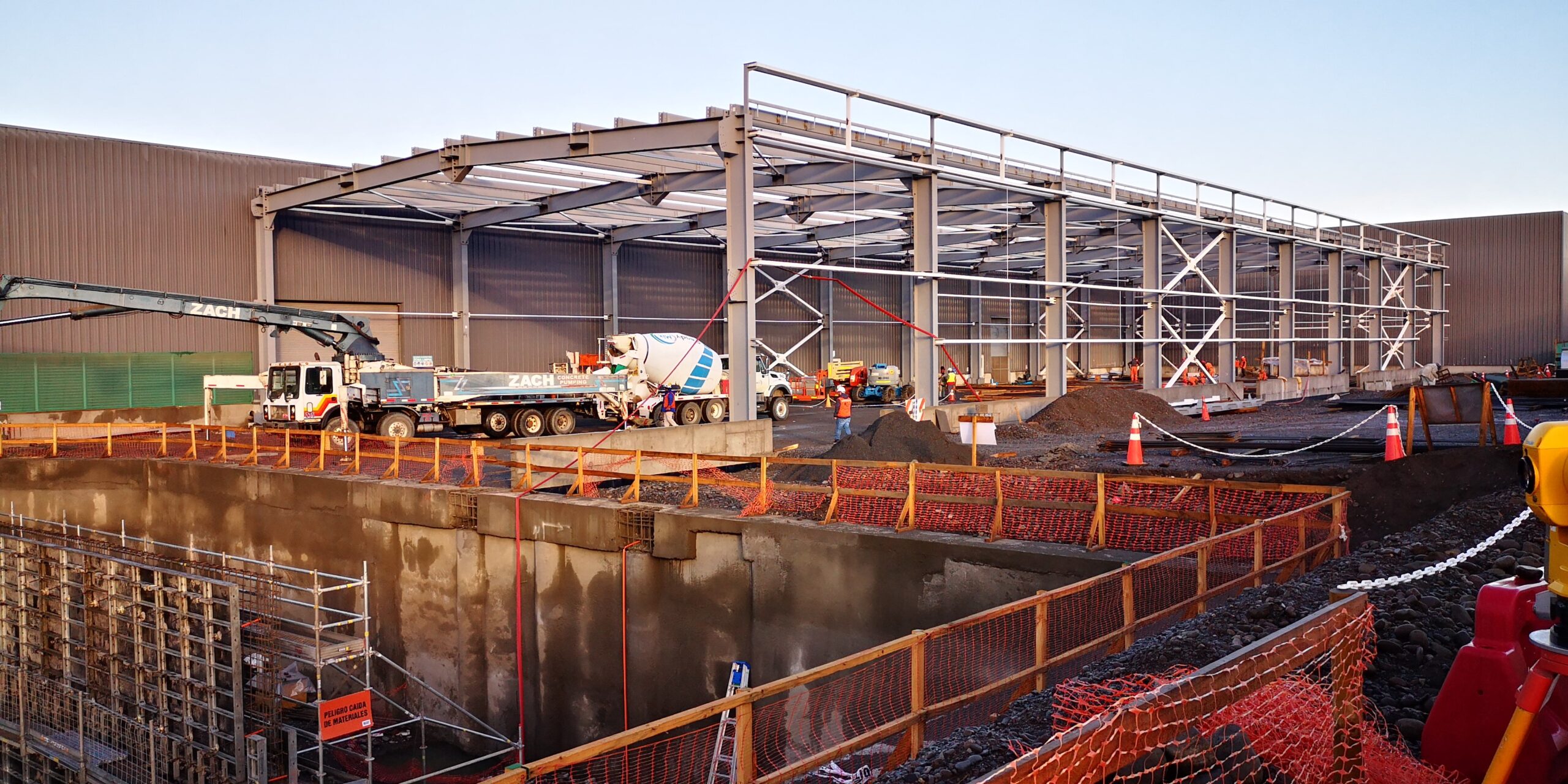
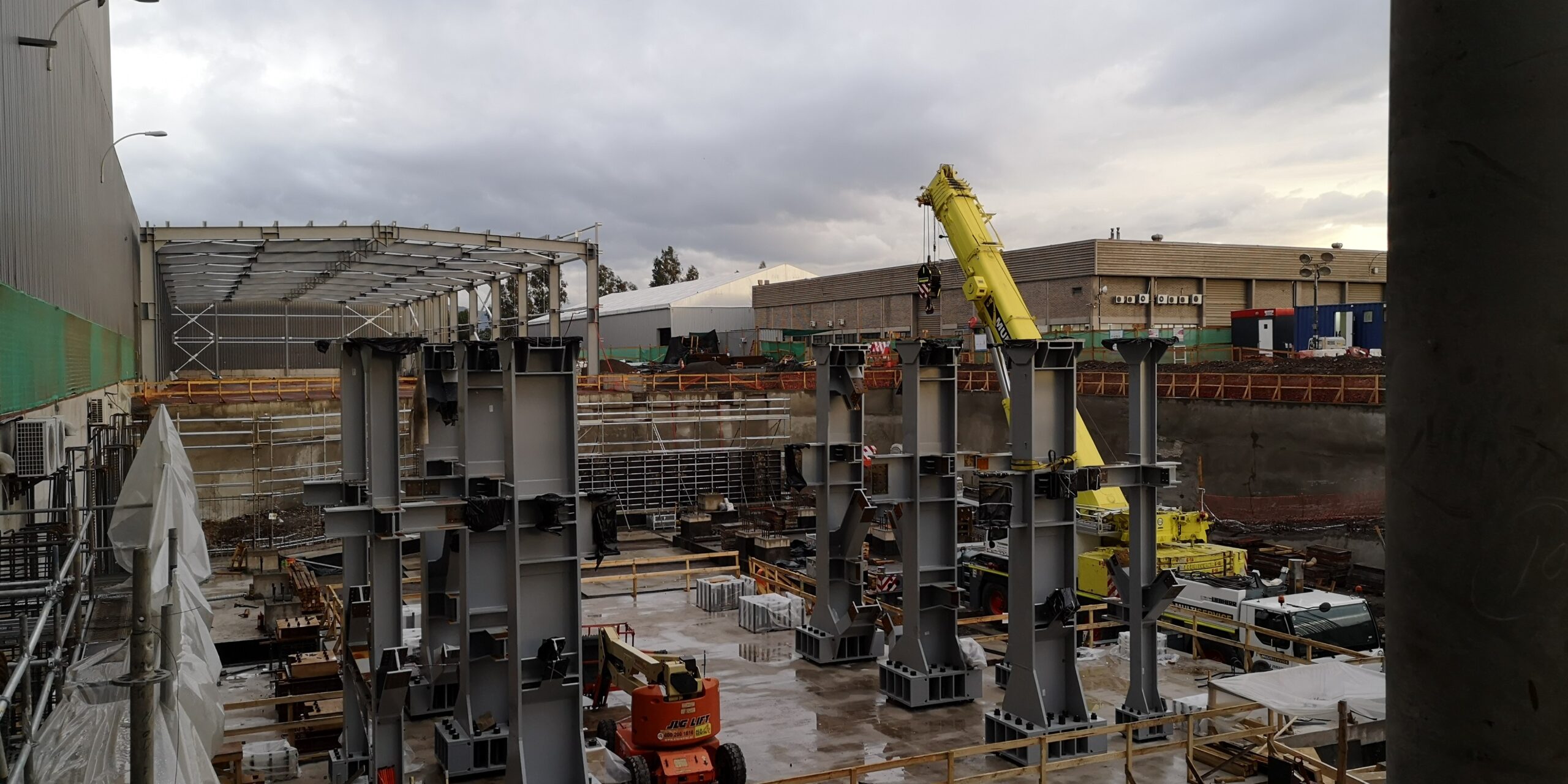
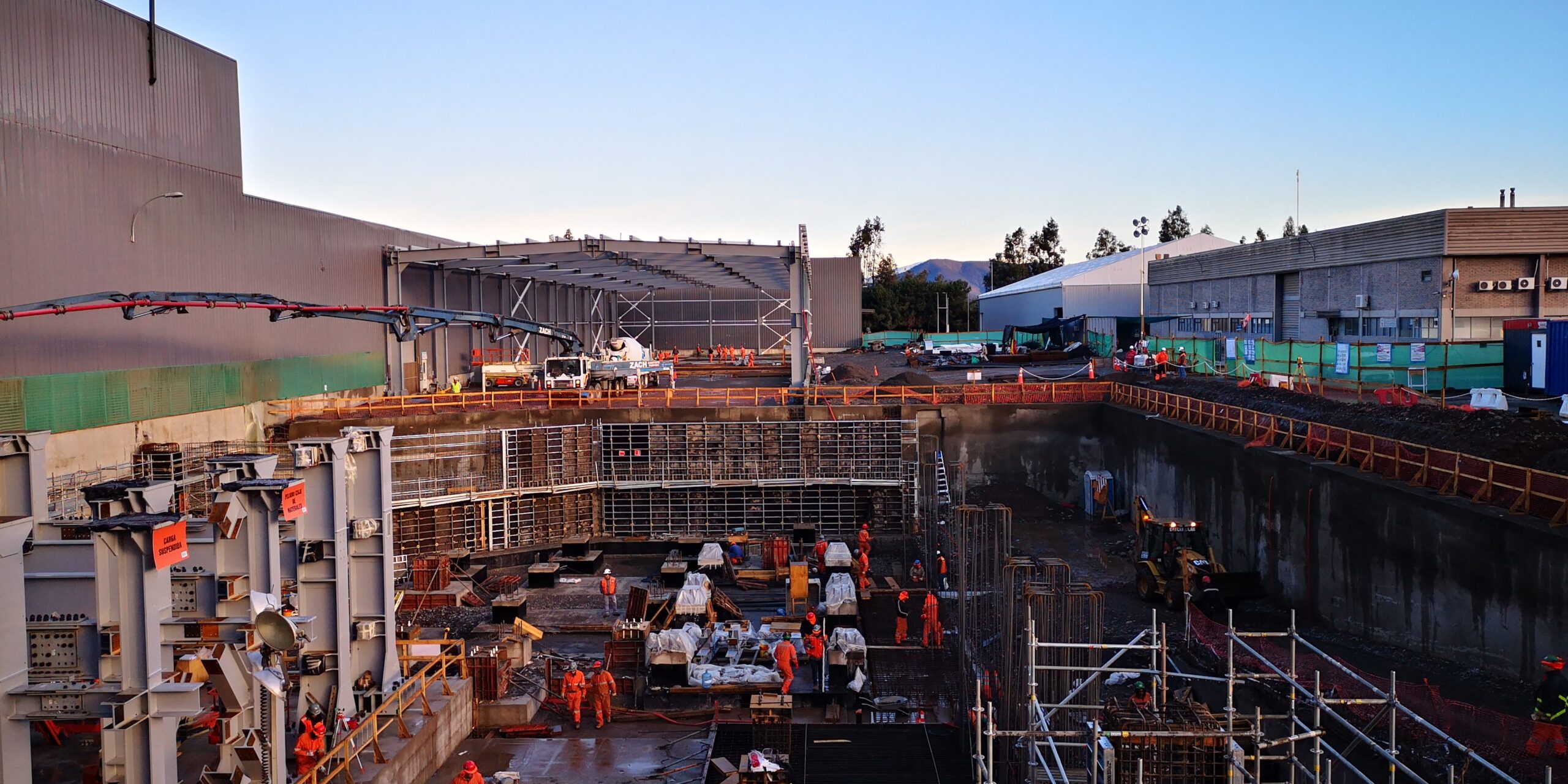
To carry out this work, the building where the production is carried out was expanded, which also houses the new melting furnace and the new production line, plus an electrical room to supply the energy demand of the new facilities.
In addition, in the EPCM development, due to the increase in processing capacity at the factory, the expansion and modification of some of the existing facilities was contemplated, such as the finished product warehouse, truck loading yard, cullet tanks, process water plant, LNG storage area and parking lots.
An important point to note is that while the project was being developed, the production process never stopped, consequently, once the new furnace was implemented, the operation of the old furnace was deactivated. Achieving the above requires great planning and coordination of the entire team of specialists from the conception of the project to carry out the designs and define the construction sequence without altering the normal operation of the plant or risking the safety of the workers.
The project carried out by PA Engineering contemplated increasing the production capacity of the factory to total 405 tons/day of molten glass, for which the replacement of the current furnace was considered, because it fulfilled its useful life, with a new one that allowed the integration of the largest amount of molten glass, and the incorporation of a new production line of 165 tons/day.
To carry out this work, the building where the production is carried out was expanded, which also houses the new melting furnace and the new production line, plus an electrical room to supply the energy demand of the new facilities.
In addition, in the EPCM development, due to the increase in processing capacity at the factory, the expansion and modification of some of the existing facilities was contemplated, such as the finished product warehouse, truck loading yard, cullet tanks, process water plant, LNG storage area and parking lots. An important point to note is that while the project was being developed, the production process never stopped, consequently, once the new furnace was implemented, the operation of the old furnace was deactivated. Achieving the above requires great planning and coordination of the entire team of specialists from the conception of the project to carry out the designs and define the construction sequence without altering the normal operation of the plant or risking the safety of the workers.
Manufacturing

NEW REFRIGERATED CONTAINER MANUFACTURING PLANT
NEW REFRIGERATED CONTAINER MANUFACTURING PLANT
Industrial Sector
Manufacturing
Client
Maersk
Location
San Antonio, Valparaíso Region
Date
2012-2013
Service Area
EPCM Solutions
Solutions
Environmental Impact Statement, basic and detailed engineering, procurement management of equipment and materials, construction administration and technical inspection of works.
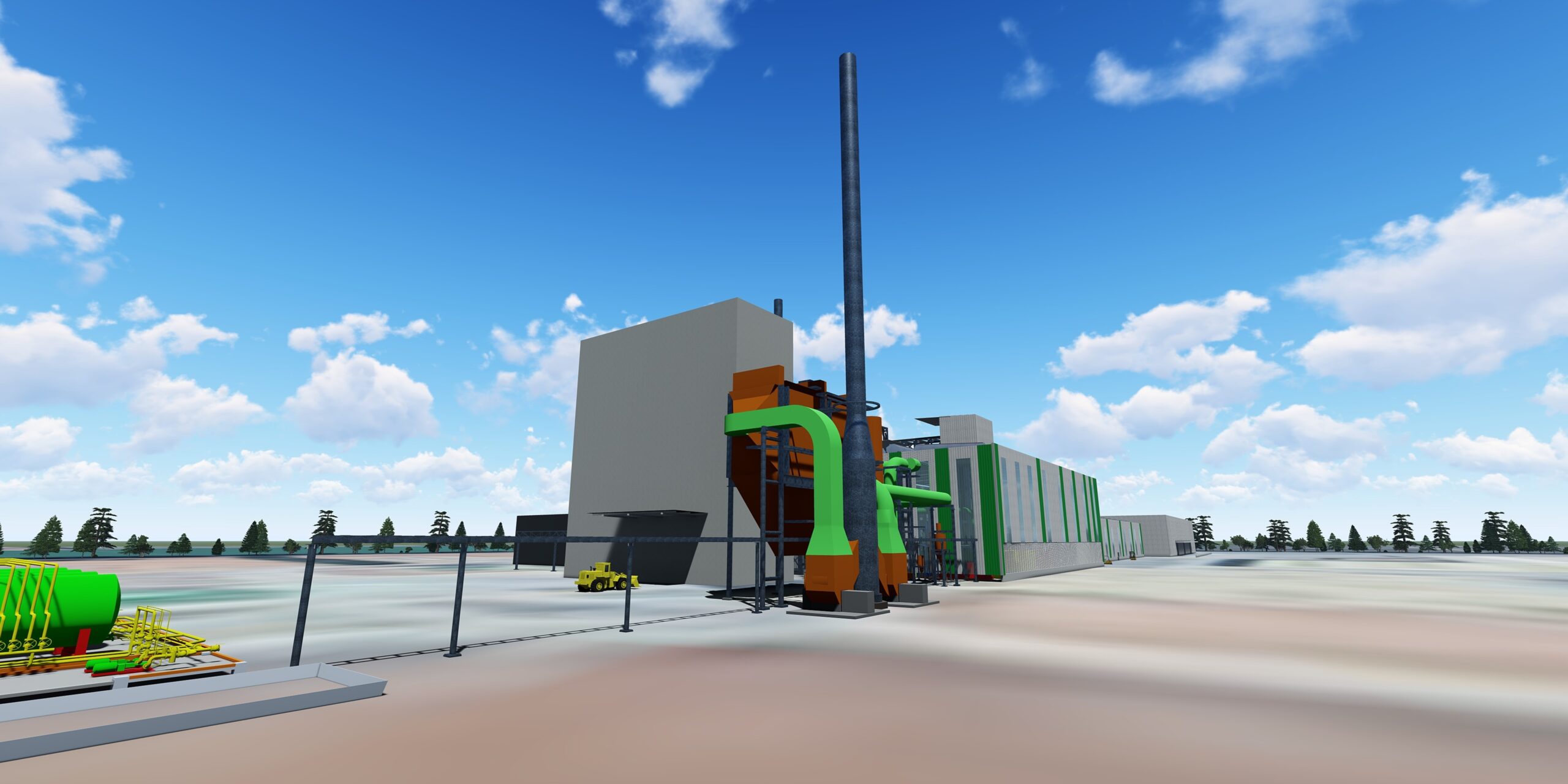
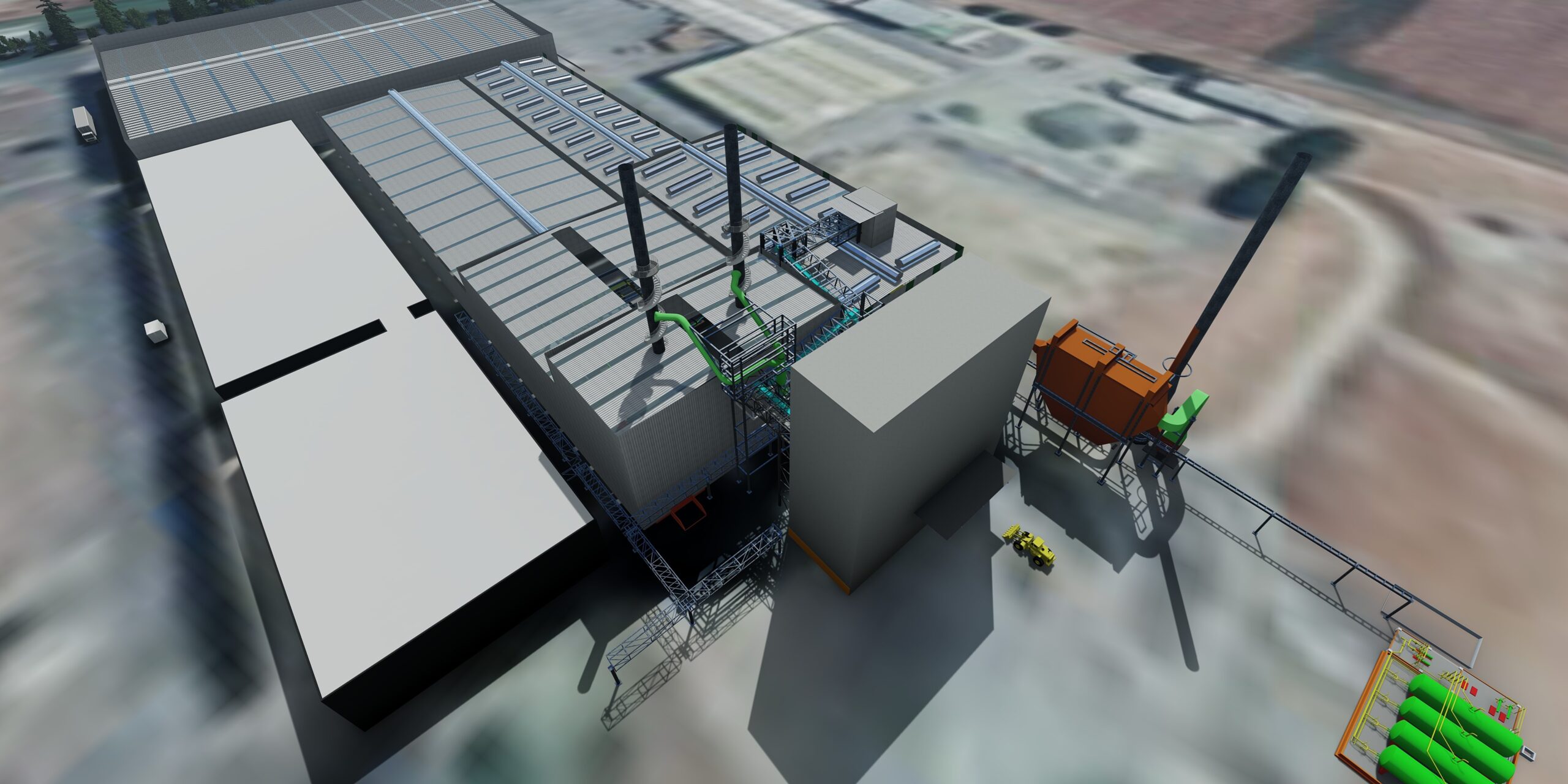
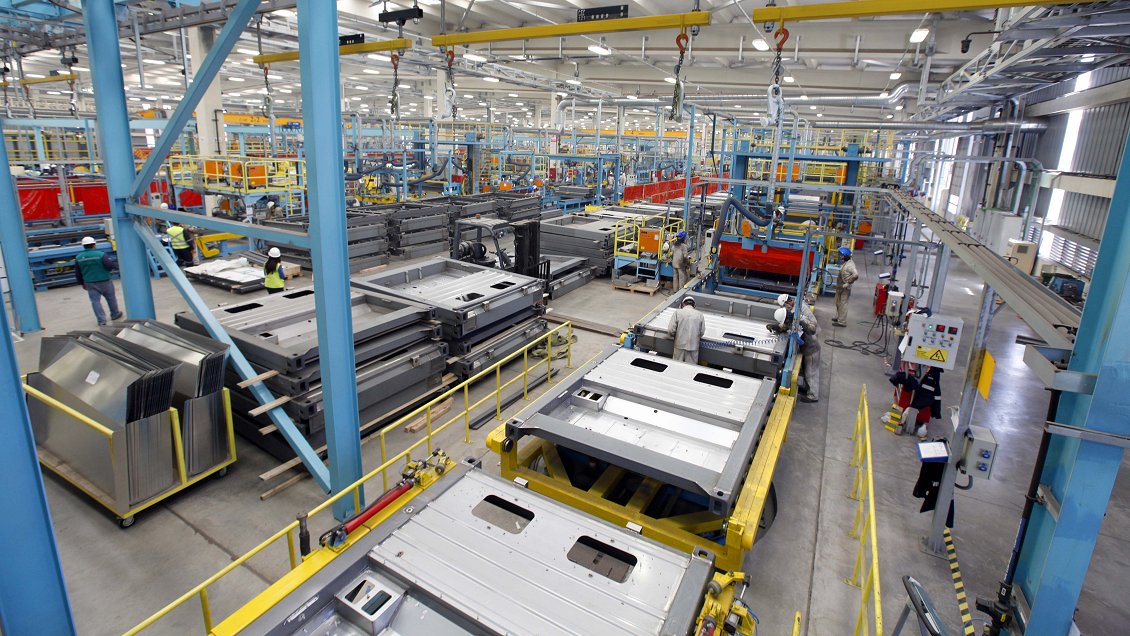
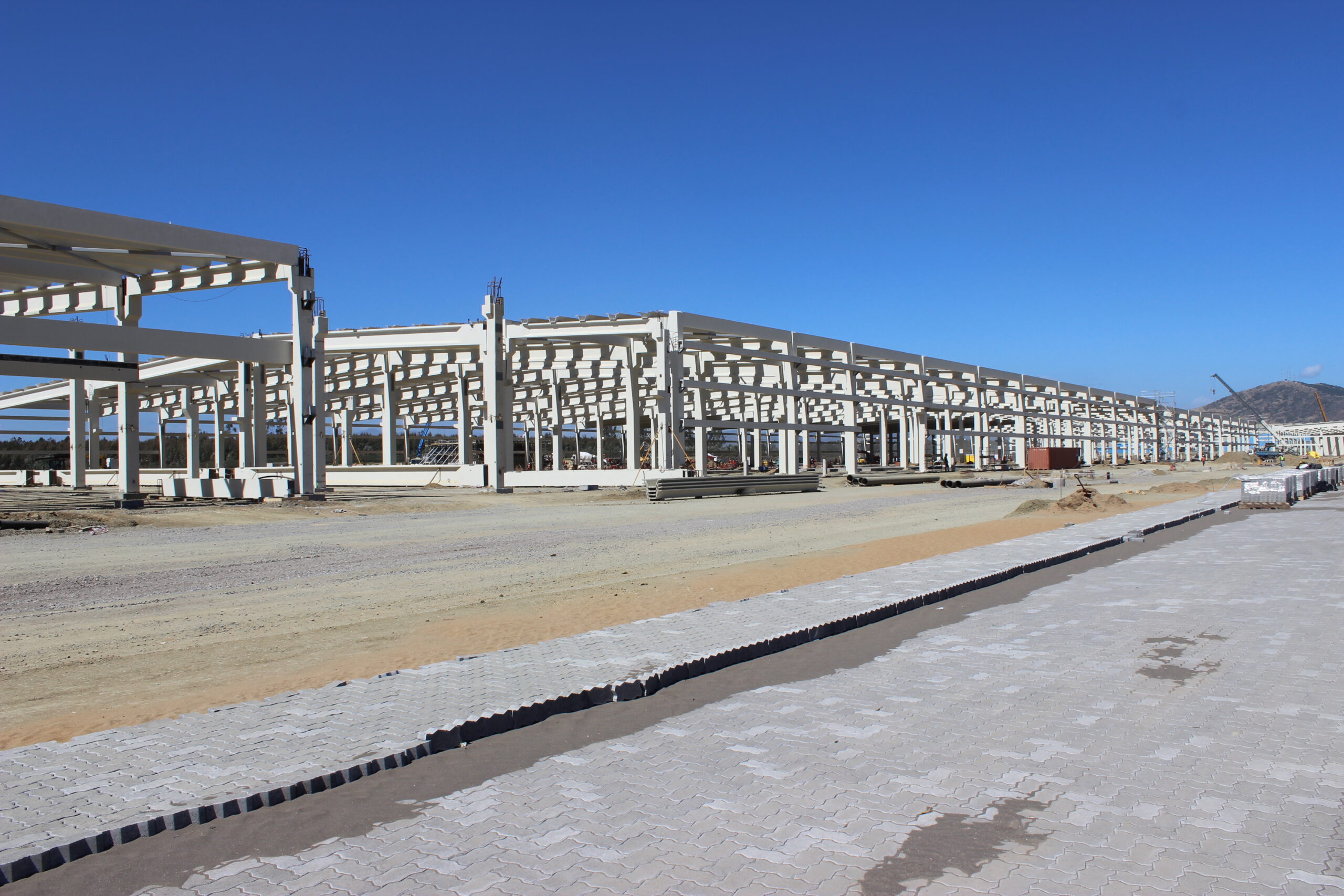
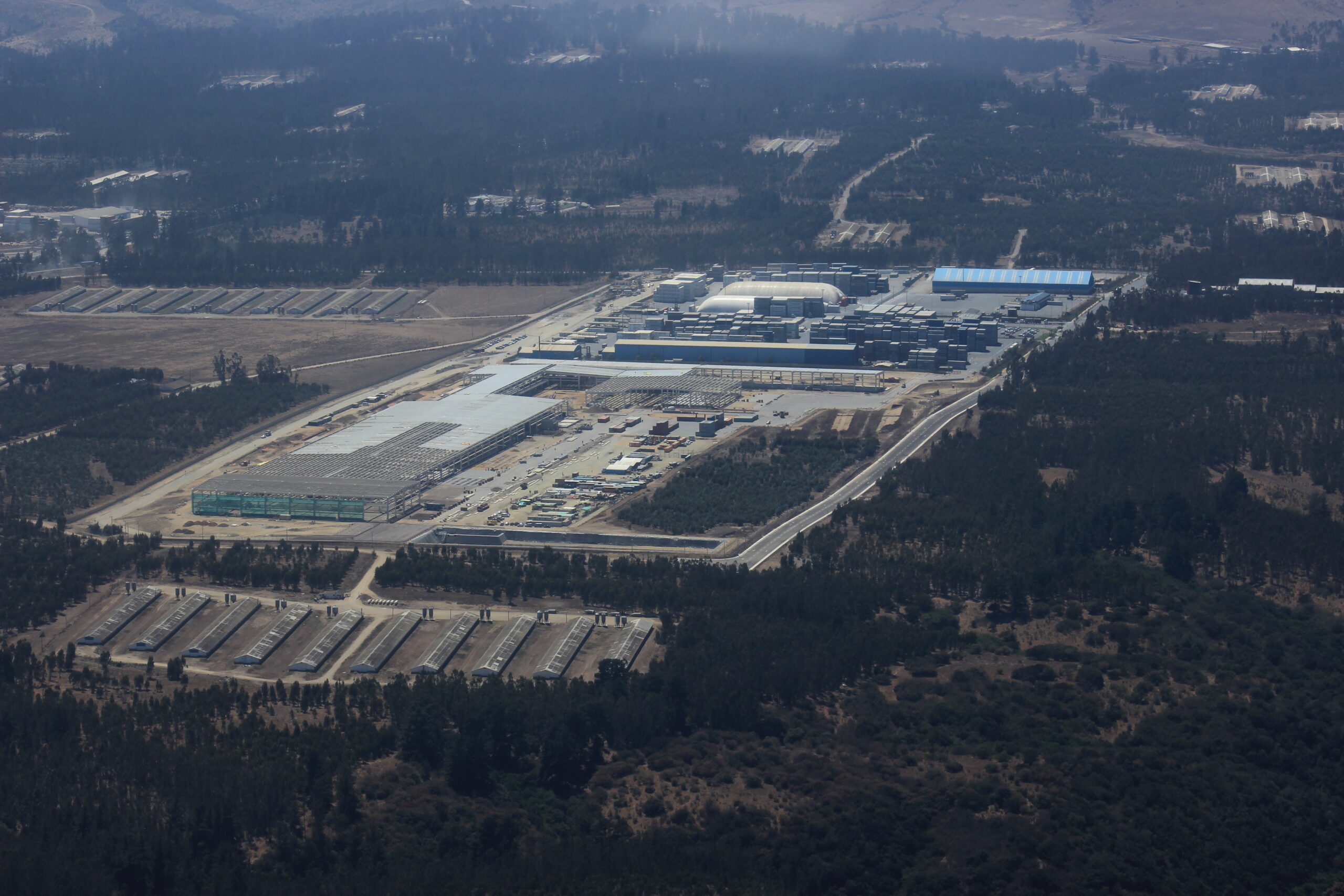
The project for Maersk Container Industry was executed under the EPCM modality and consisted of the construction of a refrigerated container factory. The construction of the plant was approximately 70,000 m2 and was located on a 330,000 m2 site, producing 40,000 containers per year.
Wood Products
PLYWOOD PLANT EXPANSION
PLYWOOD PLANT EXPANSION
Industrial Sector
Wood Products
Client
CMPC Maderas
Location
Mininco, Province of Malleco in the Araucanía Region
Date
2011- 2013
Service Area
EPCM Solutions
Solutions
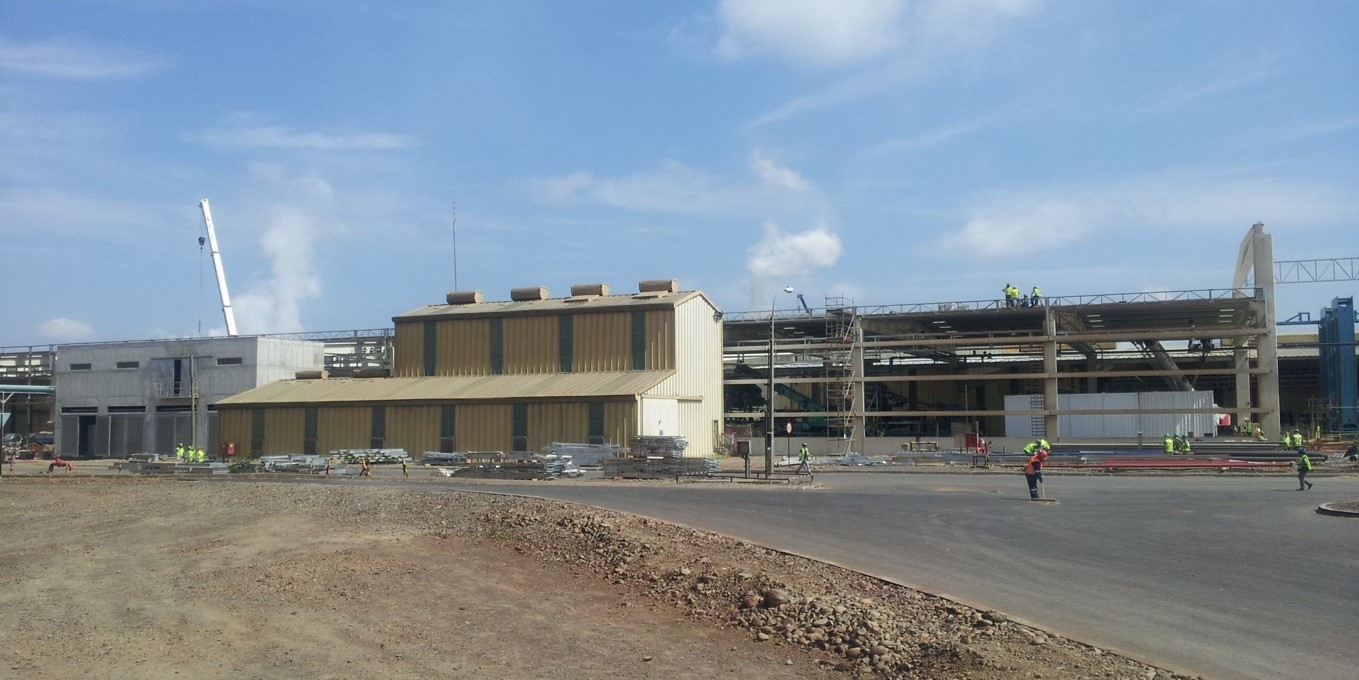
Basic and detail engineering, equipment and materials acquisitions, construction administration and technical inspection of works. That is, an EPCM, which, on this occasion, was defined with Target Price, with the commitment of PA Engineering not to exceed the Capex and a deadline for development, defined in common agreement with the client.
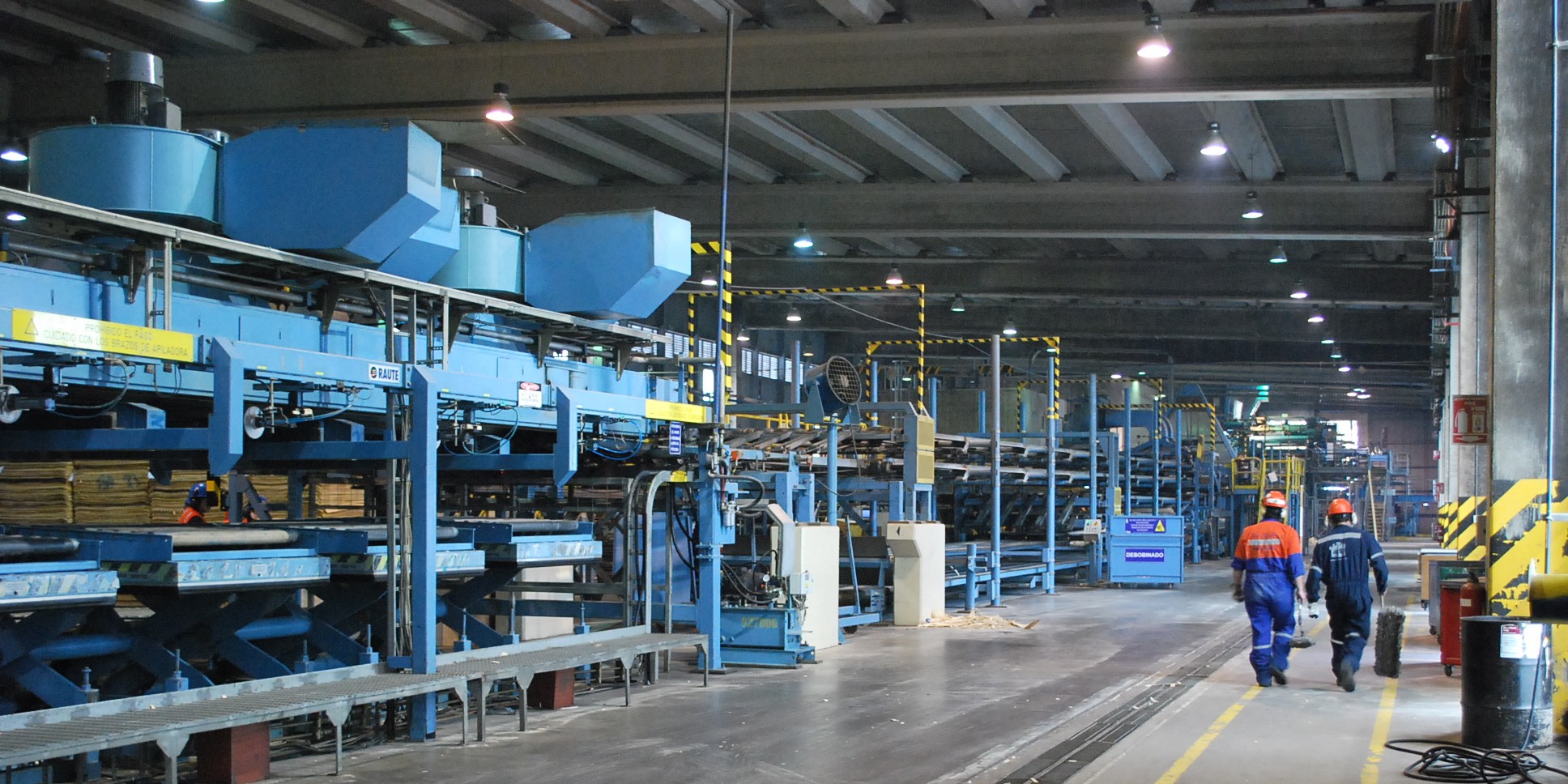
In mid-2011, the management of CMPC Maderas’ Plywood plant requested support to estimate the investment involved in expanding its facilities to double its production, going from 240,000 m3 to 500,000 m3 of panels per year without stopping its operation, and to incorporate new technologies to optimize its processes and the efficient use of energy. This is how PA Engineering takes on the challenge, but with an extra ingredient, to carry out the task under the demands and commitment involved in carrying out an EPCM Target Price.
In the first stage of the project, and with the intention of estimating the investment to carry out the transformation of Plywood, a group of PA Engineering professionals worked on the basic engineering.
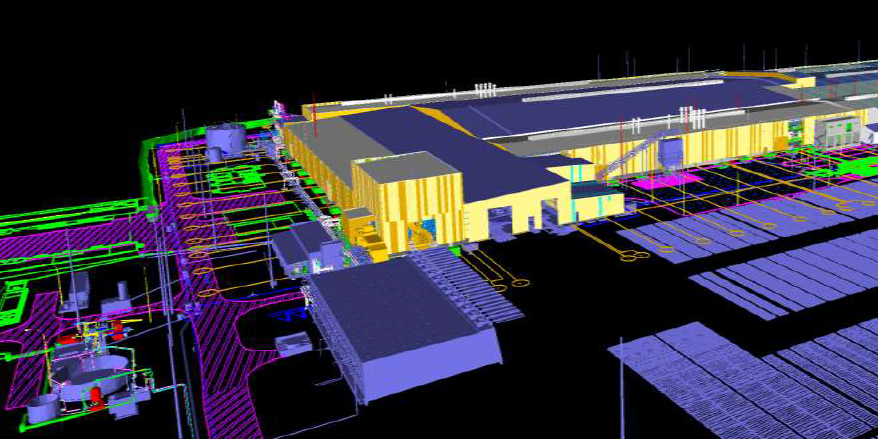
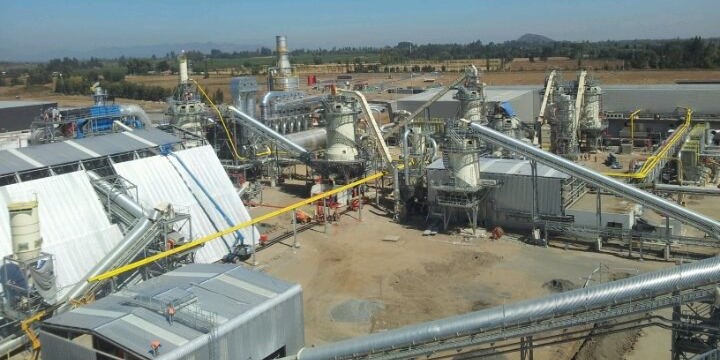
In May 2012, the second stage of the project began, the development of detailed engineering in mechanics, piping, civil and structures, electricity and instrumentation and control, which implied not only the expansion of the plant on its four sides, but also the redesign and expansion of the by-product handling areas. the steam networks, compressed air, fire network, sewage treatment plant and electrical system.
As the detailed engineering progressed, advances began in the procurement, in order to begin construction, all under strict control of compliance with deadlines and Capex and without interfering with the normal operating schedule of the plant.
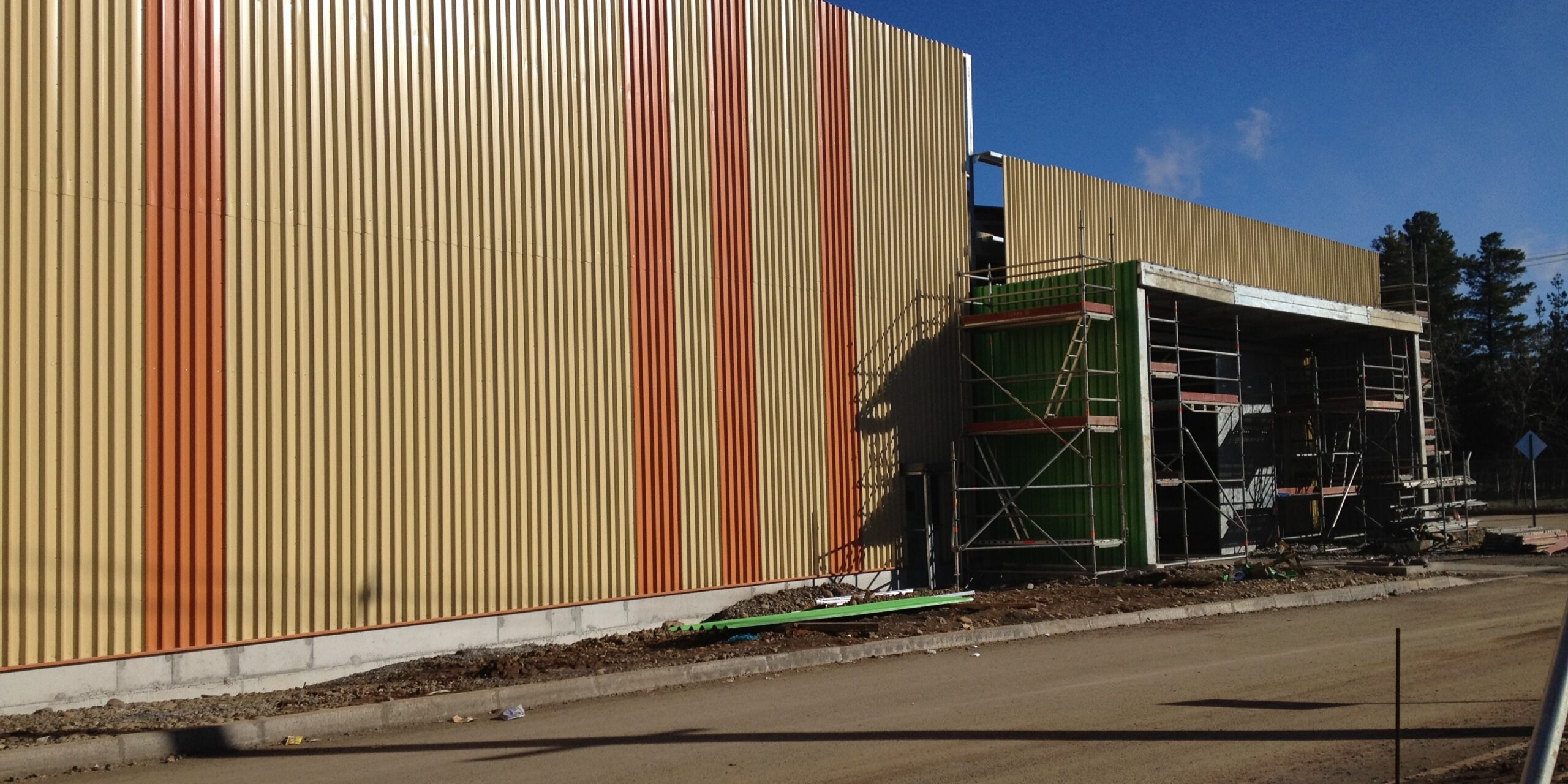
The expansion project to increase production from 240,000 m3/year to 500,000 m3/year of finished plywood, also included the expansion of the industrial warehouse by 31 thousand m2, expansion of the office building, doubling the storage capacity of the piece yard, incorporating an additional unwinding line with its respective by-product handling area, two dryers, an additional joining machine, two automatic gluing and arming lines, two cold presses and two hot presses, and in the finishing area, two automatic panel repair lines and a new squaring and sanding line were incorporated. Additionally, a line was installed to provide greater added value to the panels (texturing, profiling and grooving).
Along with this, the pending areas of the original project were carried out: paving of interior roads, warehouse buildings, spare parts, maintenance workshops, quality control laboratory, dressing rooms, casino, operations and administration offices.
Energy
COAL YARD ROOF COVERING BOCAMINA POWER PLANT
COAL YARD ROOF COVERING BOCAMINA POWER PLANT
Industrial Sector
Energy
Client
Enel
Location
Coronel, Biobío Region
Date
2015-2016
Service Area
Engineering, Project Management and EPC contract.
Solutions
Basic engineering, details and EPC contract (EISI).
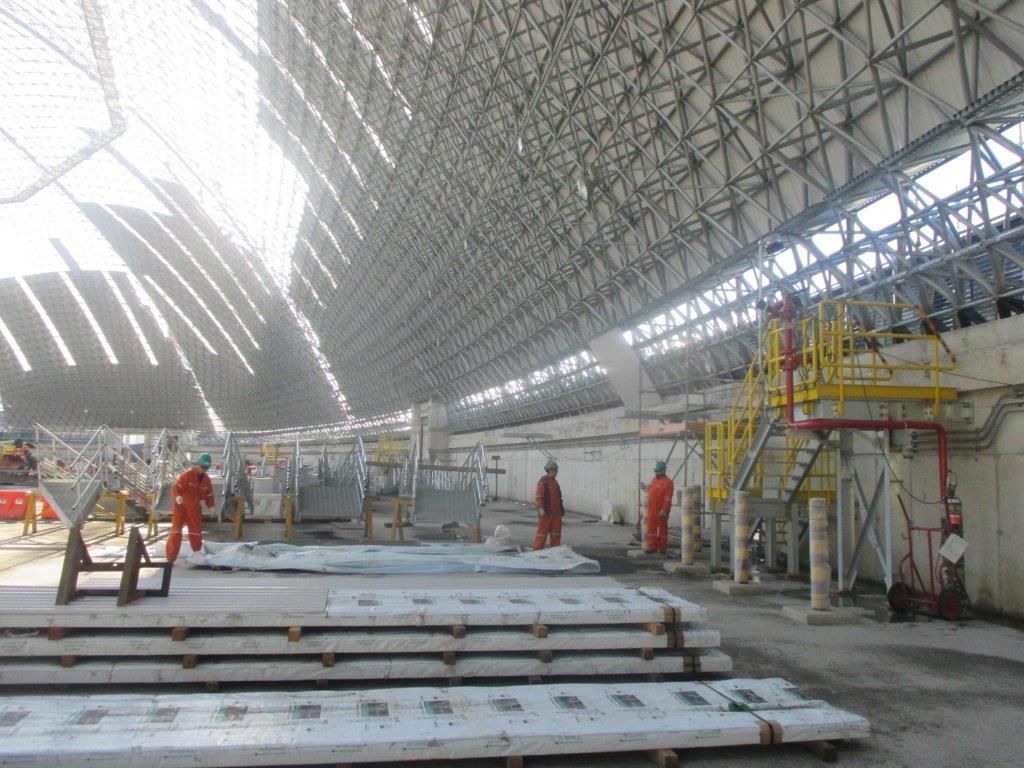
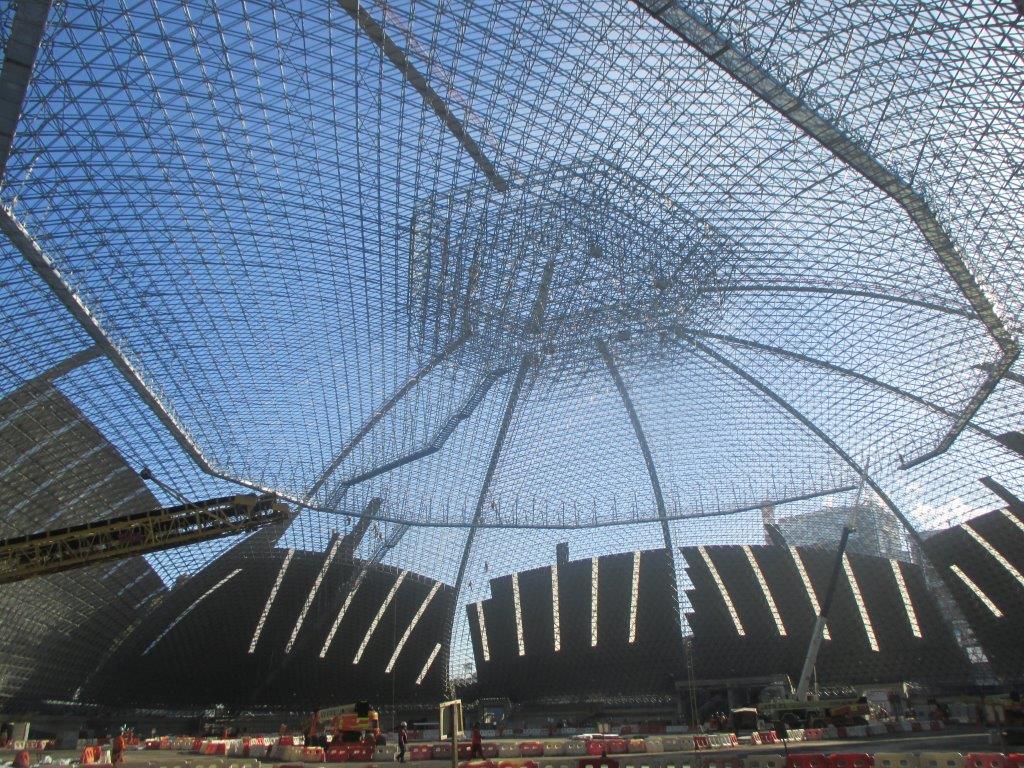
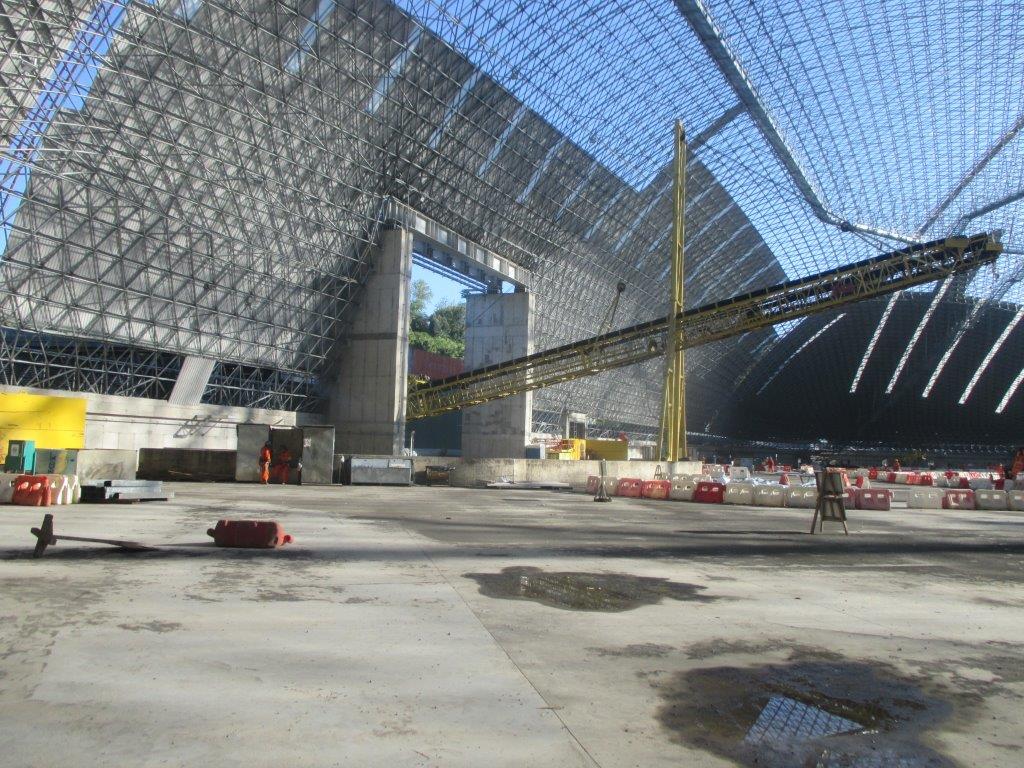
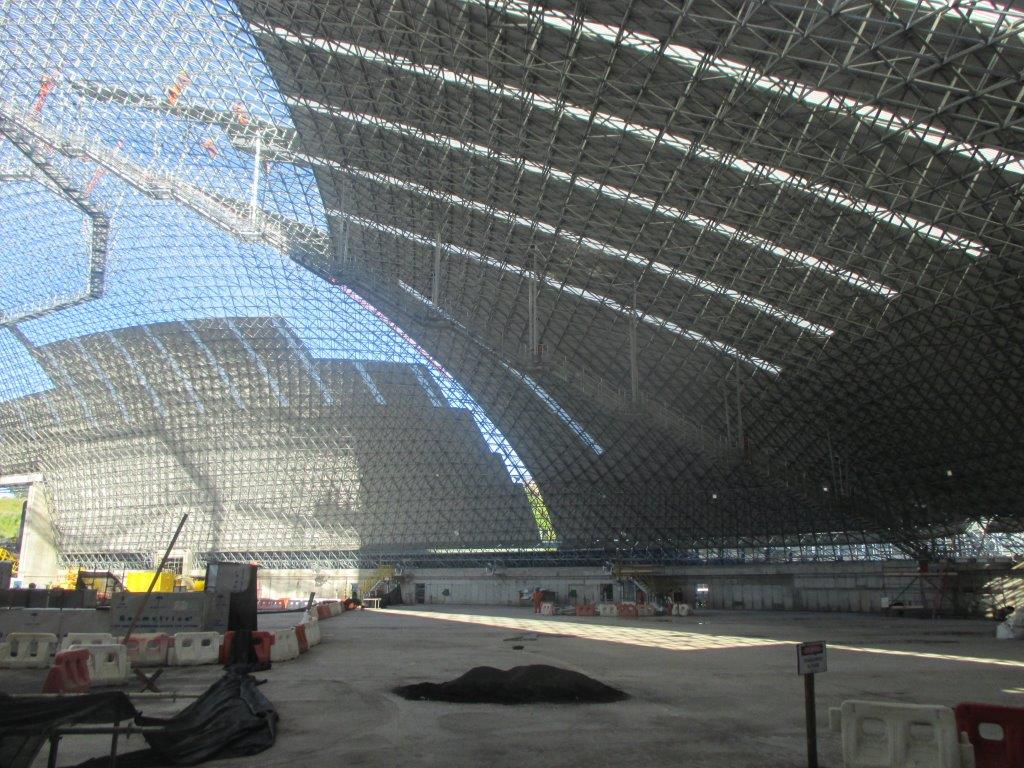
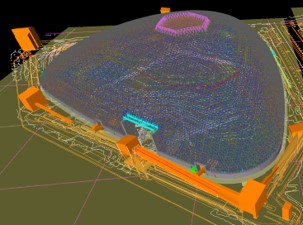
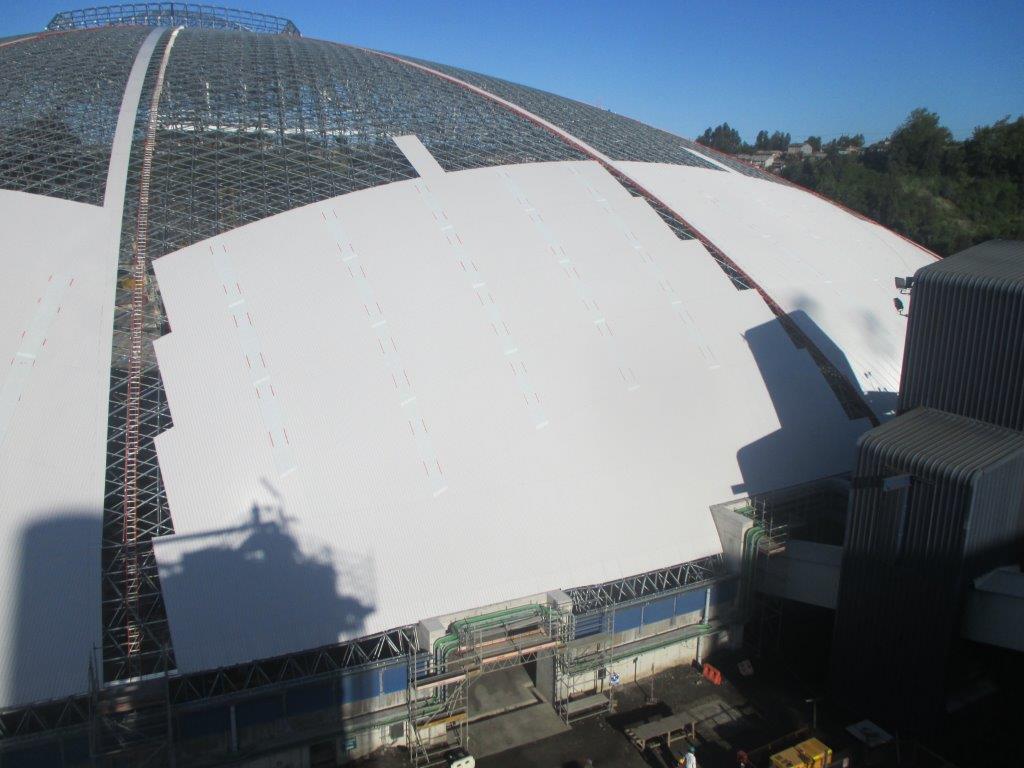
The project considered basic and detailed engineering, supplies, construction of civil works, manufacture and assembly of geodesic dome-type metal structures to specify the coverage of the court, which has multiple characteristics such as being self-supporting, light and allows it to adapt to the geometry of the terrain. This particularity makes the construction fast and similar to a large puzzle that is assembled by technical teams throughout the coverage area, without the use of cranes.
Once the structure was completed, a base cover of ribbed metal sheets was laid, similar to those used in industrial buildings. The project covered an area of 45,000 m2.